Few pieces of jewelry have a working history as long as the brooch. Before it was decorative, it was practical, and that mix of function and beauty is part of why it keeps coming back.
From Fastener to Keepsake
The brooch began as the “fibula,” a pin-and-clasp device used in the Bronze Age and later across ancient Greece and Rome to hold cloaks and garments closed. Over time, the fastener became a canvas for craftsmanship. In early medieval Ireland, metalworkers created pieces like the “Tara” Brooch, made around 700 AD from cast and gilded silver with gold filigree, amber, and glass. It is now held by the National Museum of Ireland.
By the Victorian era, brooches carried emotion as well as style. After Prince Albert died in 1861, Queen Victoria’s long period of mourning helped popularize mourning jewelry, including brooches made of jet or designed to hold a lock of a loved one’s hair. In the 20th century, the brooch continued its ability to convey meaning and status without words. Former U.S. Secretary of State Madeleine Albright chose her pins to signal her mood or message at diplomatic meetings, a practice she wrote about in her book Read My Pins: Stories from a Diplomat’s Jewel Box.
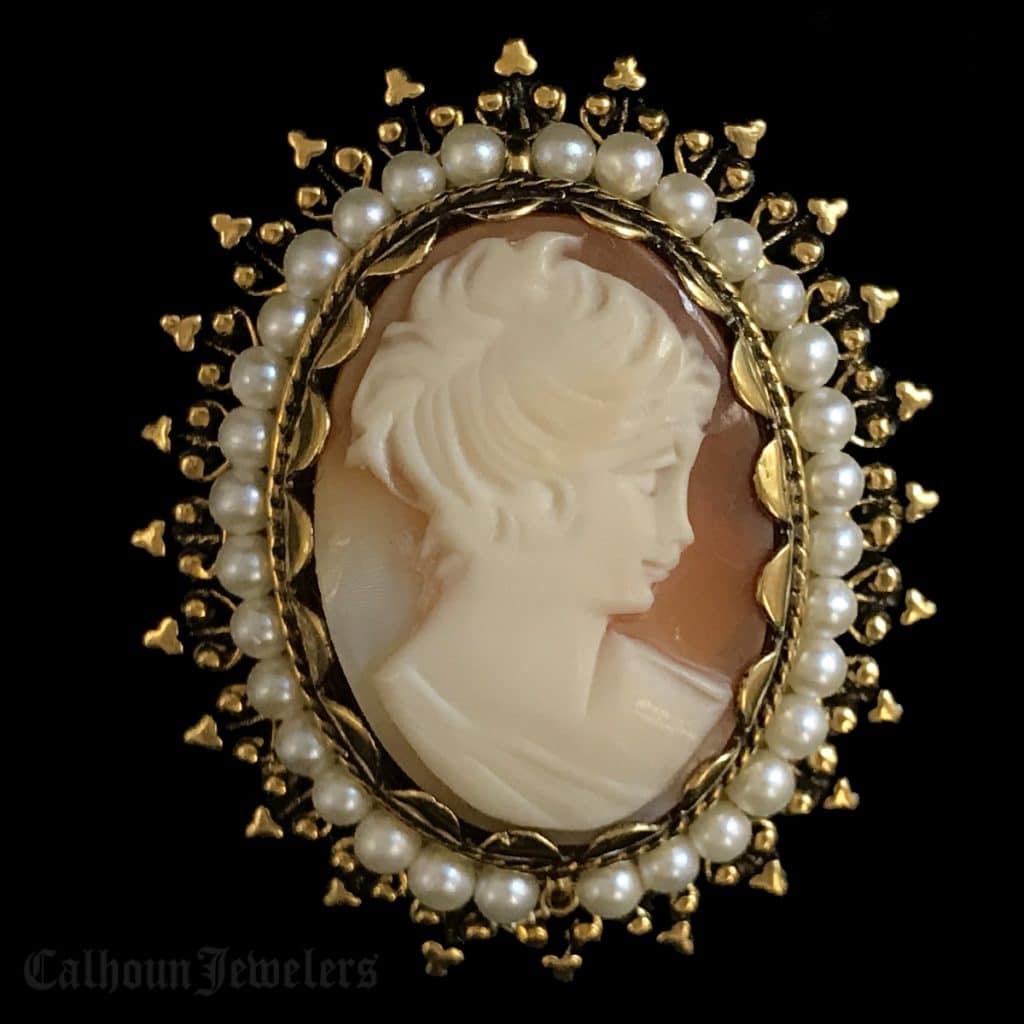
Traditional Victorian era shell cameo set in a 14K gold frame with cultured pearls. The pearls are not glued as they traditionally may have been, but are strung on wire, lending them extra safety.
Why Brooches Are Trending Now
This latest revival is being led, in part, by men. At the 2026 Golden Globes, guests from Snoop Dogg in a diamond brooch to Benny Blanco and Orlando Bloom in vintage-style pins made the accessory a focal point of menswear on the red carpet. At the BAFTAs, host Alan Cumming wore a custom-made brooch fastened at his collar in place of a bow tie.
A brooch is a jewelry piece men can have fun with within the confines of traditional menswear, adding personality without a full wardrobe change.
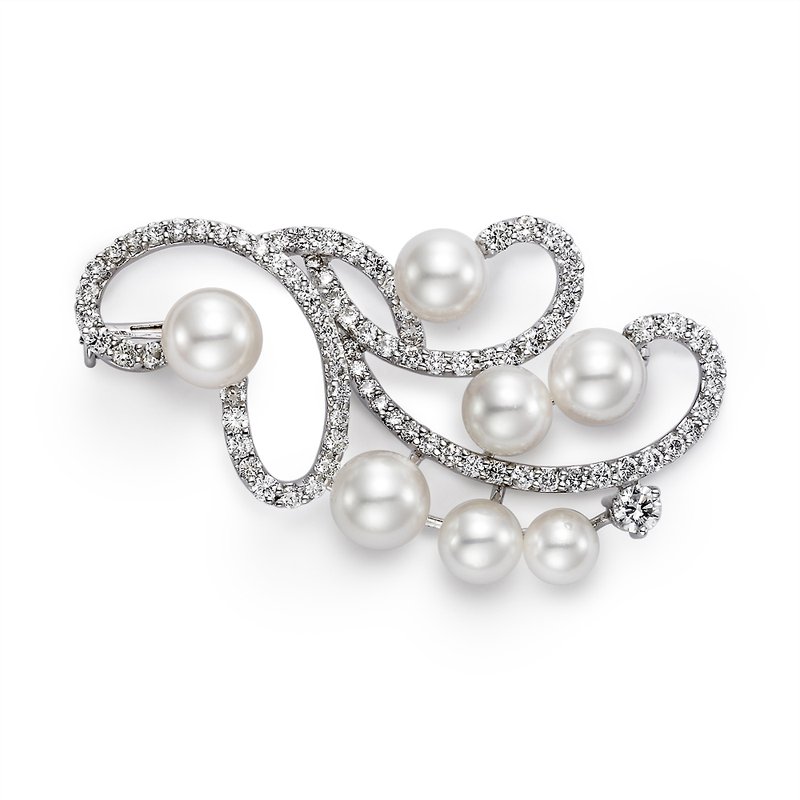
Freshwater pearl and diamond brooch by Mastoloni.
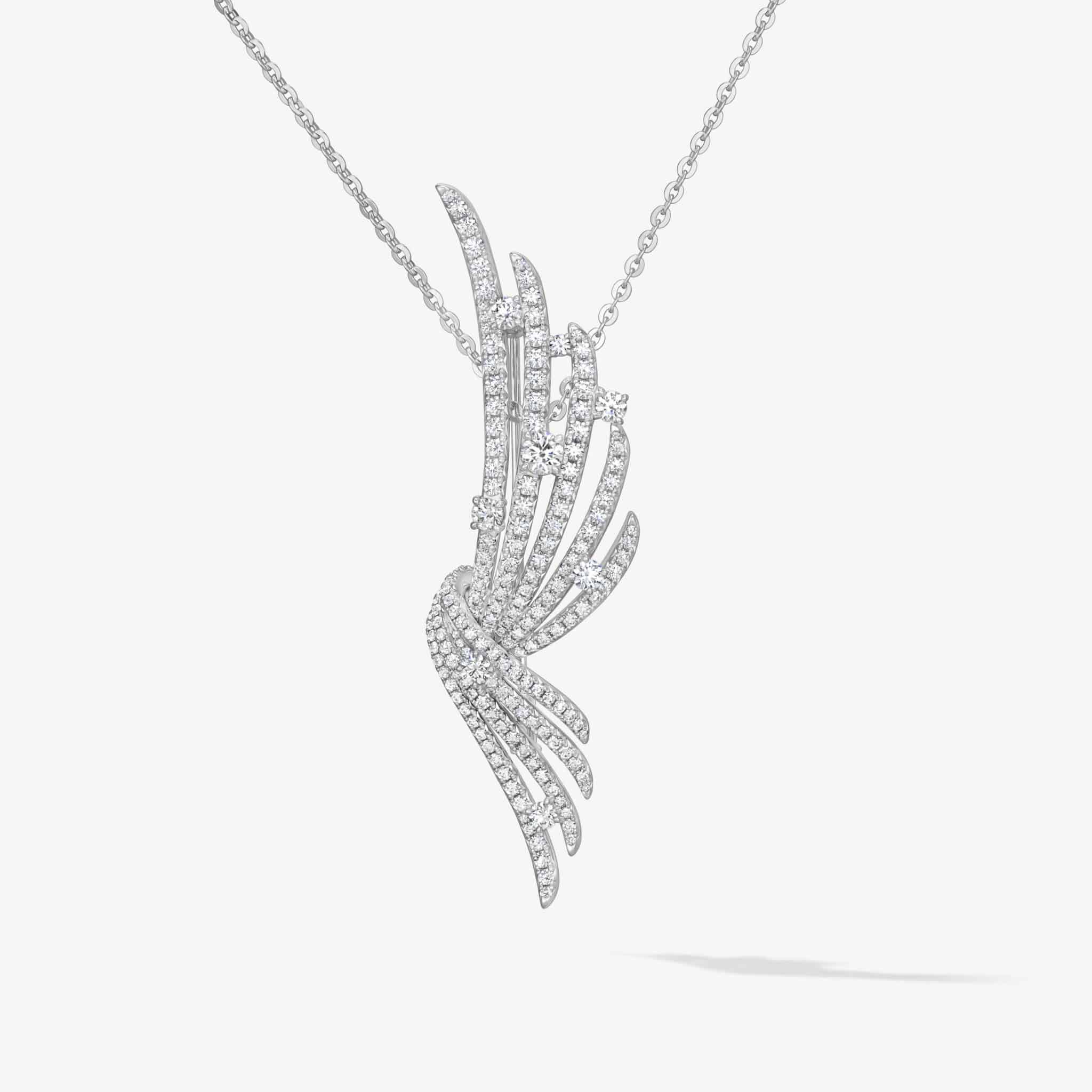
VELA French cut pavé convertible brooch by Hearts On Fire, that can be worn as a brooch or a pendant.
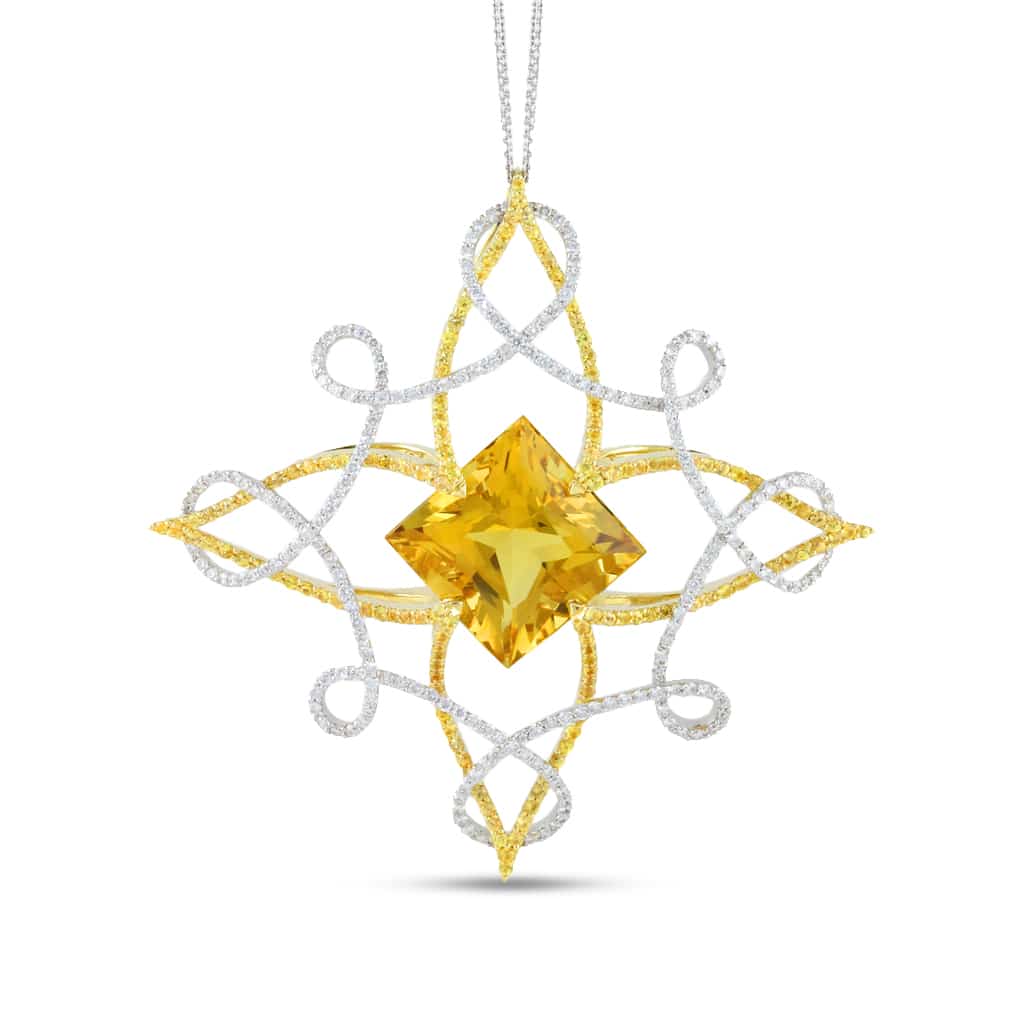
Yellow beryl, yellow sapphire, and diamond one-of-a-kind convertible brooch by Federic Sage.
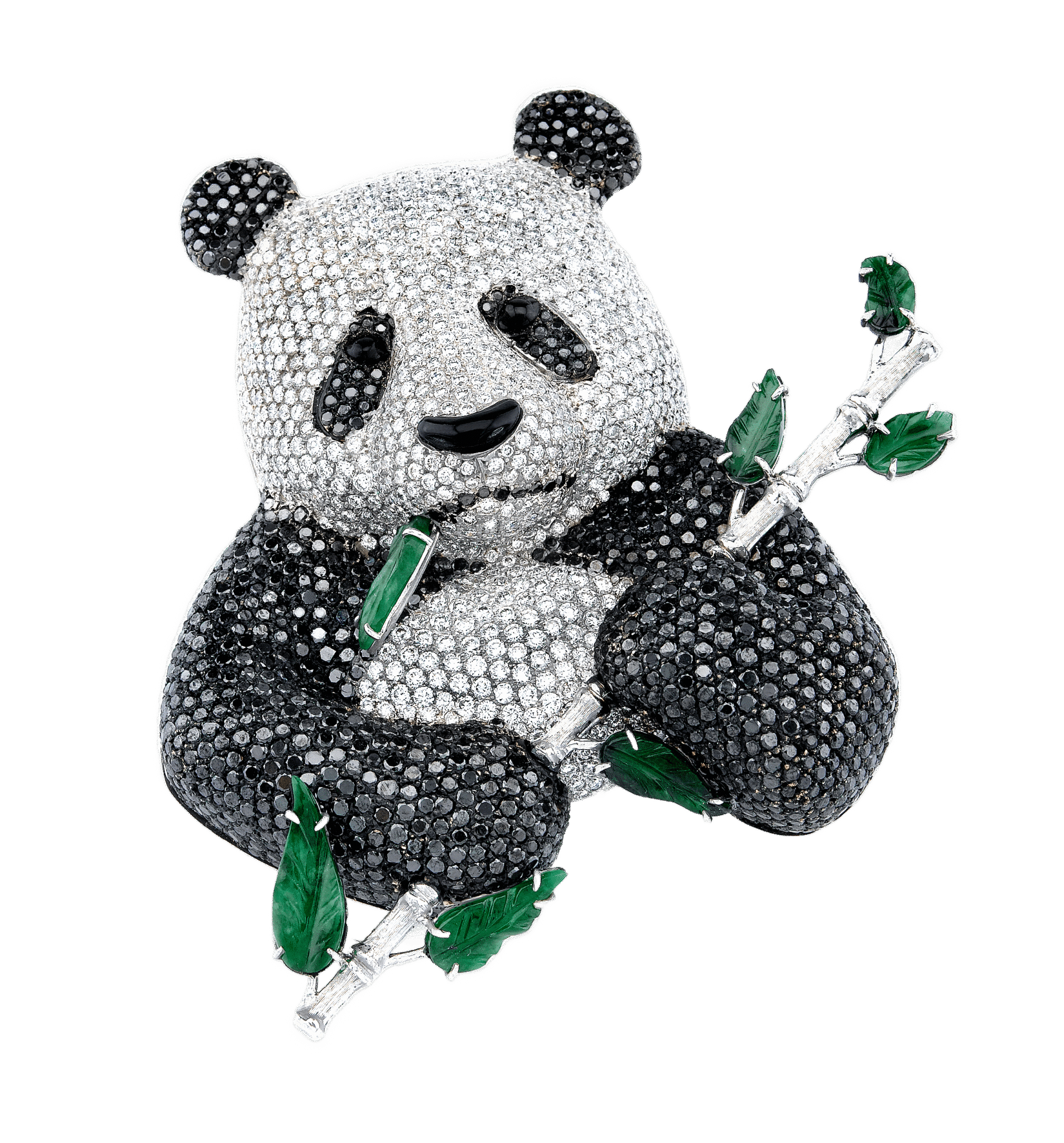
White and black diamond panda with hand-carved jadeite leaves by Ricardo Basta.
How To Wear a Brooch
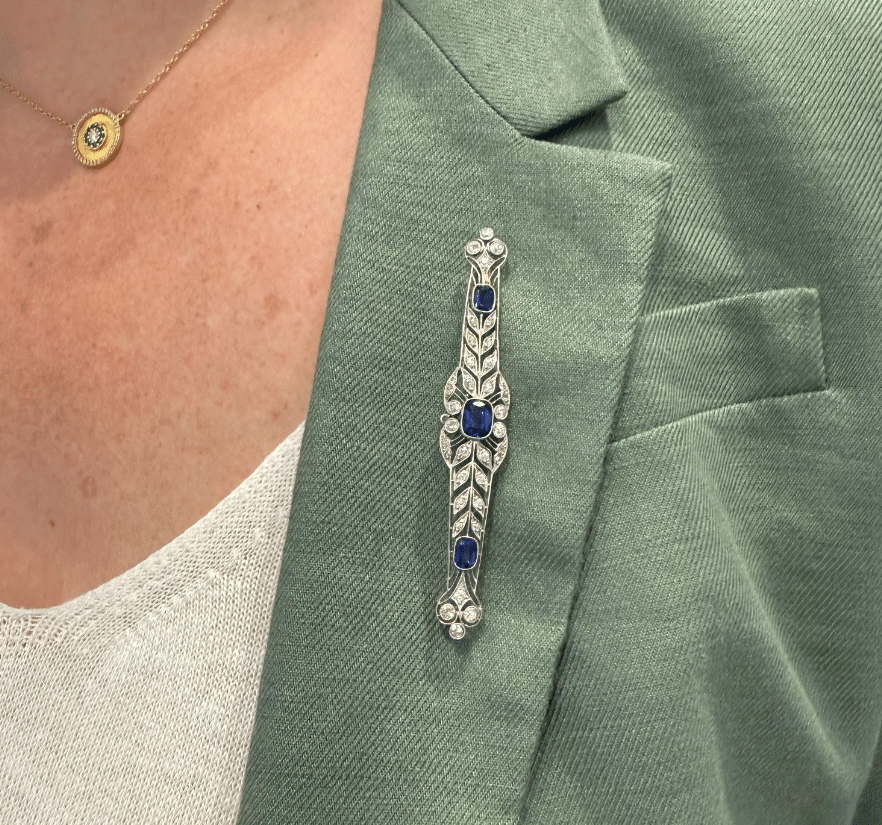
The lapel is the classic starting point. Traditionally, a brooch sits on the left lapel, roughly midway between the shoulder and the chest pocket, and proportion matters more than rules. A small pin suits a slim lapel; a larger piece needs room.
For something less expected, pin a brooch at the collar of a buttoned shirt in place of a tie, or on the shoulder of a knit sweater. Clustering two or three smaller pins together creates a look that feels collected rather than matched. Brooches also work on a coat, a scarf, a hat band, or the strap of a handbag.
If you’re wearing a vintage or inherited piece, have a professional jeweler check the pin stem, clasp, and gemstone settings first. Older mechanisms can loosen over time, and a quick inspection helps protect a piece that may carry decades of family history. An American Gem Society jeweler can help you find the perfect brooch and how to care for it with confidence.
Edwardian platinum diamond and sapphire wreath bar pin at Gleim the Jeweler.