Search
Search

Tourmaline: An Electric Shock of Color

By Andrea Venn, Ph.D., CGA, JEA, Education Program Specialist, American Gem Society

With over 100 hues in its repertoire, Tourmaline has been dubbed the “chameleon gem,” and one source of tourmaline, Madagascar, is home to more than half of the chameleon species on Earth (Sisk, 2011). The late Empress Dowager of China, Tz’u-hsi (Cixi), loved tourmaline, especially pink, so much that China ordered tons of it from the mines in San Diego County, California, for gemstones and beads (Newman, 2014).

In Sinhalese, tourmaline is called turmali or toramalli, meaning “mixed,” because it has often been confused with other gemstones and mixed with them, since it comes in a vast array of hues. Gustavus III of Sweden gifted a large carved “ruby” to Catherine the Great in 1777 that was later identified as red tourmaline (Newman, 2014), and green tourmaline was frequently mistaken for high-clarity emerald by early gem traders and explorers.

Eighteenth-century Swedish botanist Carl von Linné (Linnaeus) made the first scientific record that tourmaline is pyroelectric, or electrically charged when heated or rubbed, the property that led him to call it the “electric stone” (Knuth, 2007). It is also piezoelectric, generating an electrical charge when squeezed or pressure is applied to the vertical axis. Underwater vehicles like submarines utilize this effect in pressure gauges and depth-recording instruments (Newman, 2014).

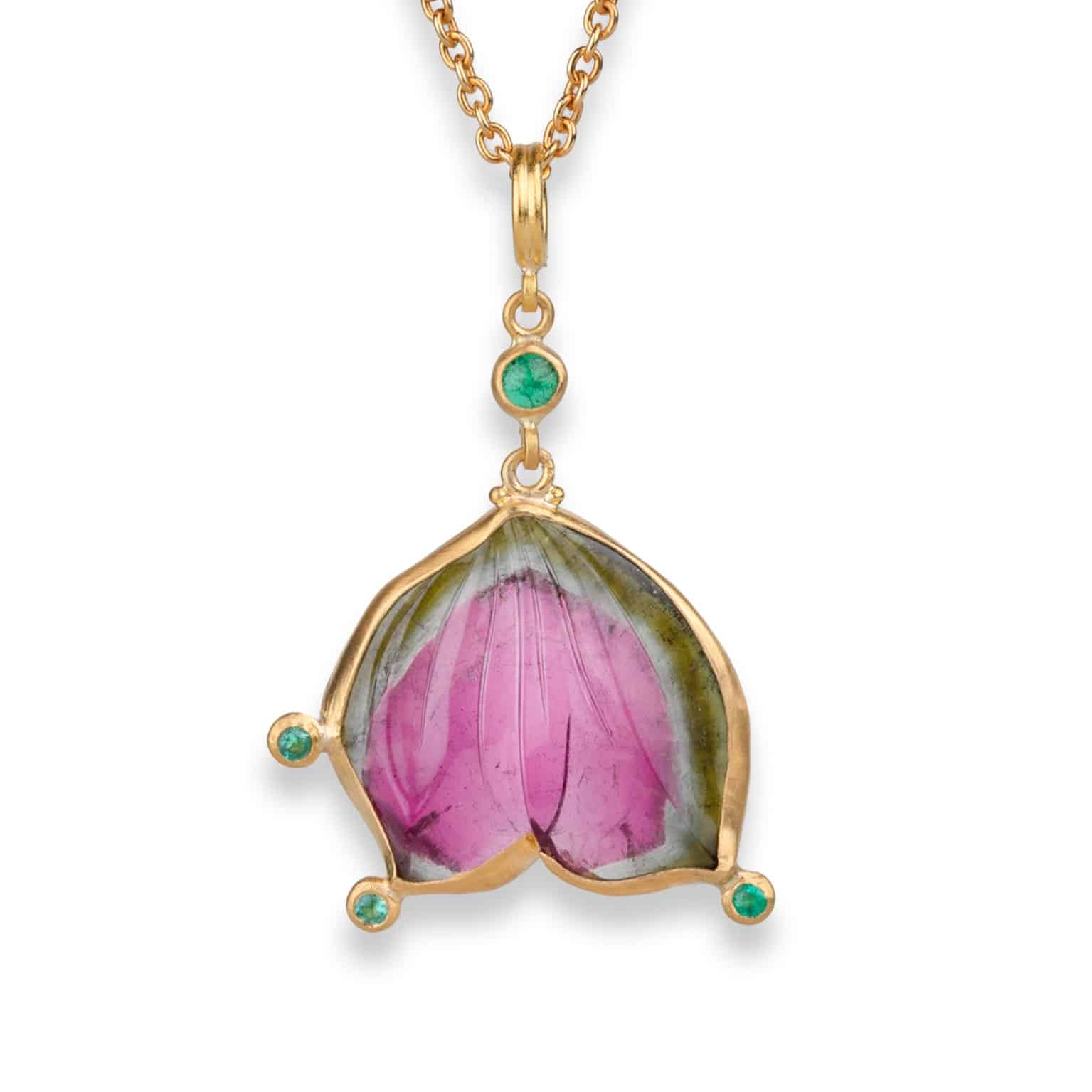
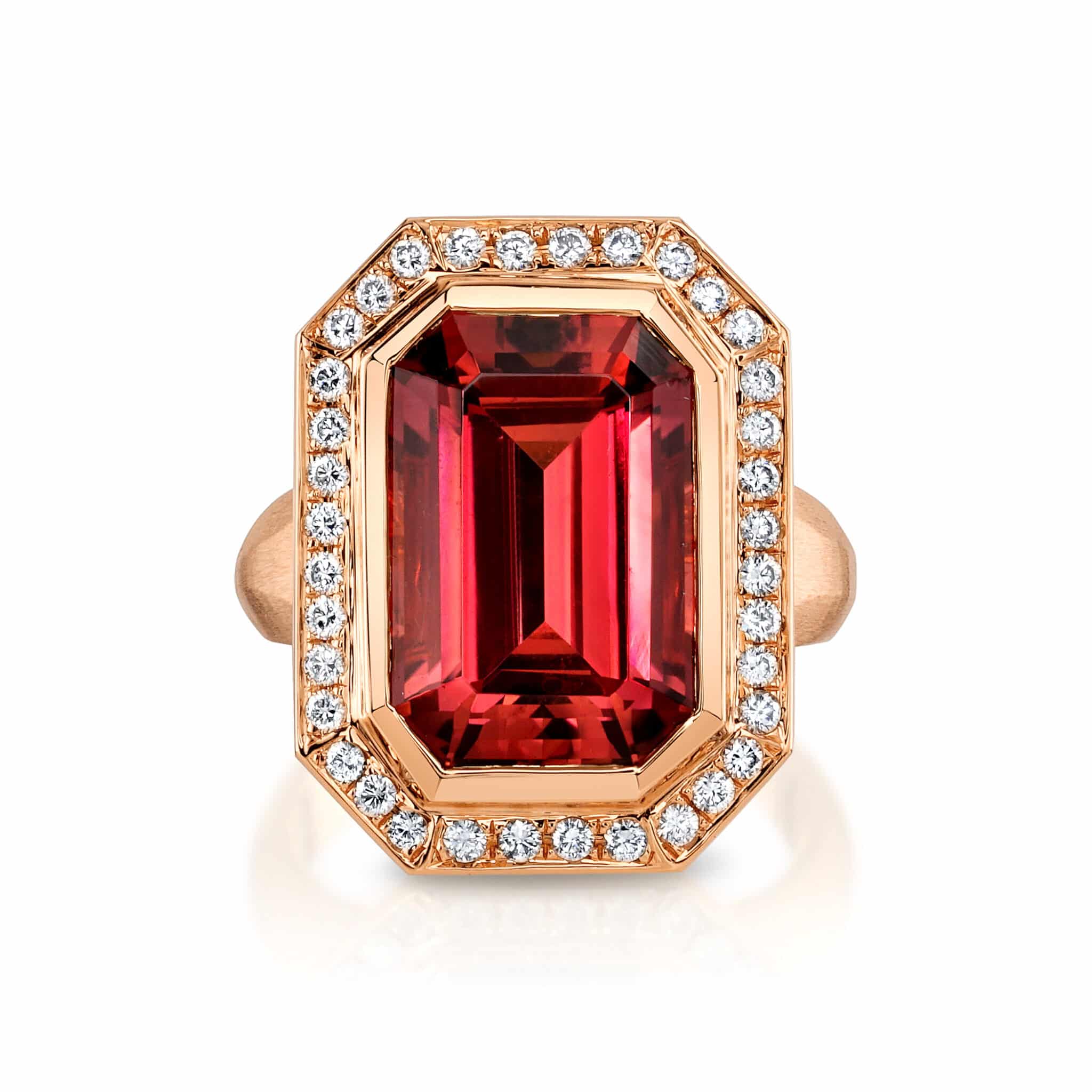
Tourmaline is a large mineral group in the trigonal crystal system that is chemically complex. Elbaite tourmaline includes varieties with commercial or trade names such as the pink- to red-hued rubellite, blue indicolite, lavender to violet siberite from the Ural Mountains, colorless achroite, green verdelite, and the popular parti-color or “watermelon” tourmaline.

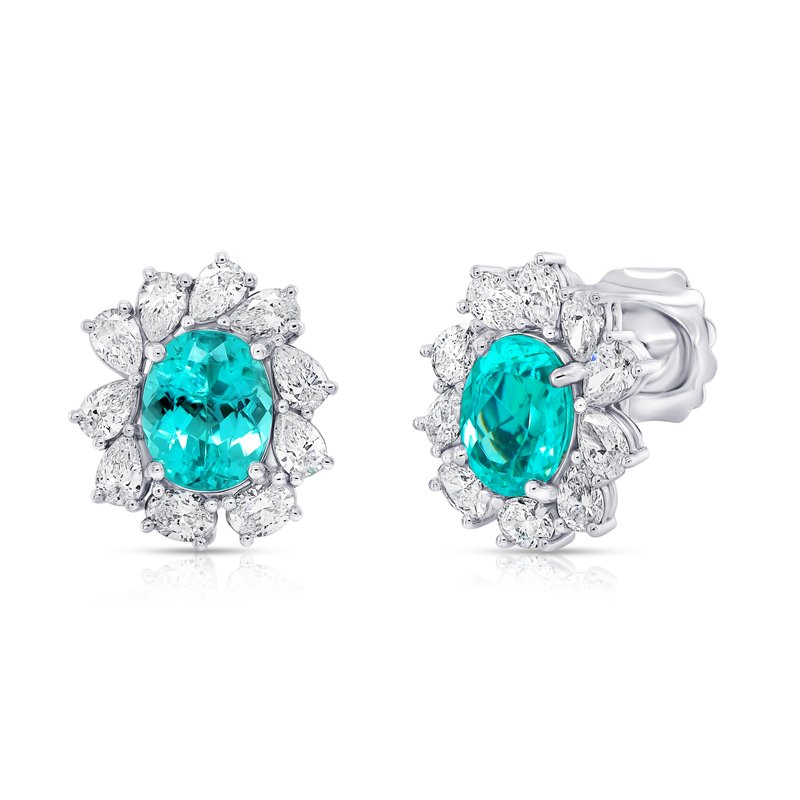
The immensely desired electric blue to green variety of elbaite found in Paraíba, Brazil, is the result of the trace element copper. Although Paraíba tourmaline has been mined out, similar-colored material has been found in other locations and is usually referred to as Paraíba-like tourmaline, cuprian tourmaline, or copper-bearing tourmaline (Sisk, 2016).

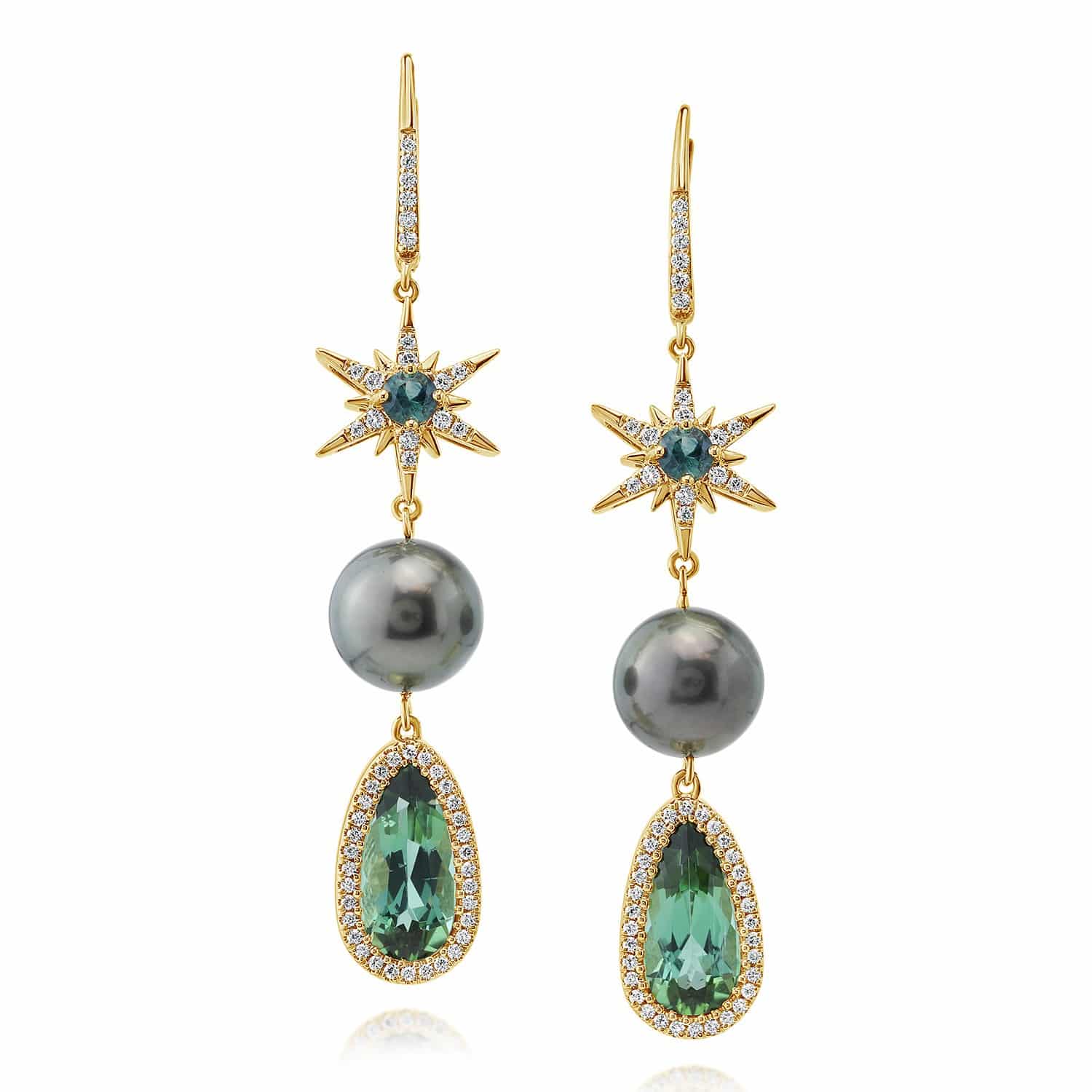
Dravite is a tourmaline mineral species frequently mixed with Uvite in important gem tourmalines, including intense green chrome tourmaline. Schorl, black tourmaline, has been a popular gem in mourning jewelry, especially in the Victorian era. Liddicoatite, named after former GIA president Richard T. Liddicoat, comes in a variety of colors that frequently have internal zoned patterns (GIA, n.d.). Tourmaline can display chatoyancy, color change, and iridescence.
While Brazil is the largest source of tourmaline, it has been found in California and Maine of the United States, Madagascar, Nigeria, Mozambique, Afghanistan, the Czech Republic, Myanmar, Namibia, Pakistan, Russia, Sweden, Tanzania, India, Sri Lanka, Kenya, and Zambia (Sisk, 2016).

Tourmaline is the state gemstone of Maine, an alternate birthstone for October, and the 8th anniversary gemstone. It is frequently cut into elongated shapes due to its long crystals and high clarity, but it can be found in a range of classic or fantasy cut shapes. Tourmaline is relatively tough, and it does not react with chemicals, with a hardness of 7 to 7.5 on the Moh’s hardness scale, so it lends itself well to frequent wear in jewelry.

If you are looking for a gemstone that has enchanted empresses and scientists alike and comes in a beautiful array of hues from locations around the world, consider tourmaline. To find an American Gem Society (AGS) jeweler near you, visit ags.org/findajeweler.

References:
GIA, Gemological Institute of America. (n.d.) Tourmaline. https://www.gia.edu/tourmaline

Knuth, Bruce G. (2007). Gems in myth, legend, and lore (Revised edition). Jewelers Press.

Newman, Renee. (2014). Exotic gems: How to identify, evaluate, select, and care for matrix opal, fire agate, blue chalcedony, rubellite, indicolite, Paraíba, and other tourmalines (Vol. 3). International Jewelry Publications.

Sisk Jr., Gerald D. (2011). Guide to gems and jewelry. America’s Collectibles Network dba Jewelry Television.

Sisk, Jerry. (2016). The Sisk gemology reference: Prominent gems (Vol. 1). America’s Collectibles Network dba Jewelry Television.